Booqello guide ·
A glamping site sells a small number of very different units. A shepherd’s hut with a hot tub, a bell tent and a treehouse do not share a price, a minimum stay or a set of extras. Most of what separates a good glamping booking system from a poor one follows from that.
1. Each unit priced on its own terms
Check that every unit can carry its own nightly rate, seasonal rates, minimum stay and photographs. A two-night weekend minimum on the hut and a one-night midweek offer on the pods should be settings, not workarounds.
2. Changeover time built in
A pod needs cleaning and resetting between guests. The system should hold a buffer per unit so it never sells a same-day turnaround you cannot service.
3. Extras that price the way they are used
Breakfast hampers are per person. Hot tub heating is once per stay. Firewood is per night. If every extra is priced as a flat add-on, you either undercharge or adjust bookings by hand.
4. A booking engine on your own website
Guests should book on your site, in your branding, without being sent somewhere that looks like someone else’s. Ask whether the booking pages and an availability calendar embed into the website you already have, and whether a guest who picks a unit and dates arrives in the booking flow with both filled in.
5. Calendar sync with the listing sites
Most sites keep a listing or two for reach. Calendar sync stops a night booked elsewhere being sold again on your own site. Most systems do this with iCal, which updates on a schedule rather than instantly. Ask how often it runs, and what happens if two bookings land in the gap.
6. Deposits and balances taken for you
The system should take a deposit at booking, collect the balance on a date you set, and chase it if a card fails, without you sending reminders. Check where the money settles: your own merchant account, or the software company’s account first.
7. Fees you can predict
Pricing models differ: a percentage of each booking, a per-booking fee, or a monthly charge per unit. Work each one out against last year’s bookings, and check whether a fee is added to the guest’s price.
8. The guest journey after the booking
Confirmation, arrival details a few days before, and a review request afterwards should go out on their own, in your wording. Gift vouchers are worth checking too: sold, tracked and redeemed against a real booking, not issued as discount codes.
Questions to ask on a demo
- Show me a unit with its own price, minimum stay and changeover buffer.
- Book an extra priced per person and one priced per night.
- Where does the guest’s money go, and when does it reach me?
- What will I pay in a year at my current number of bookings?
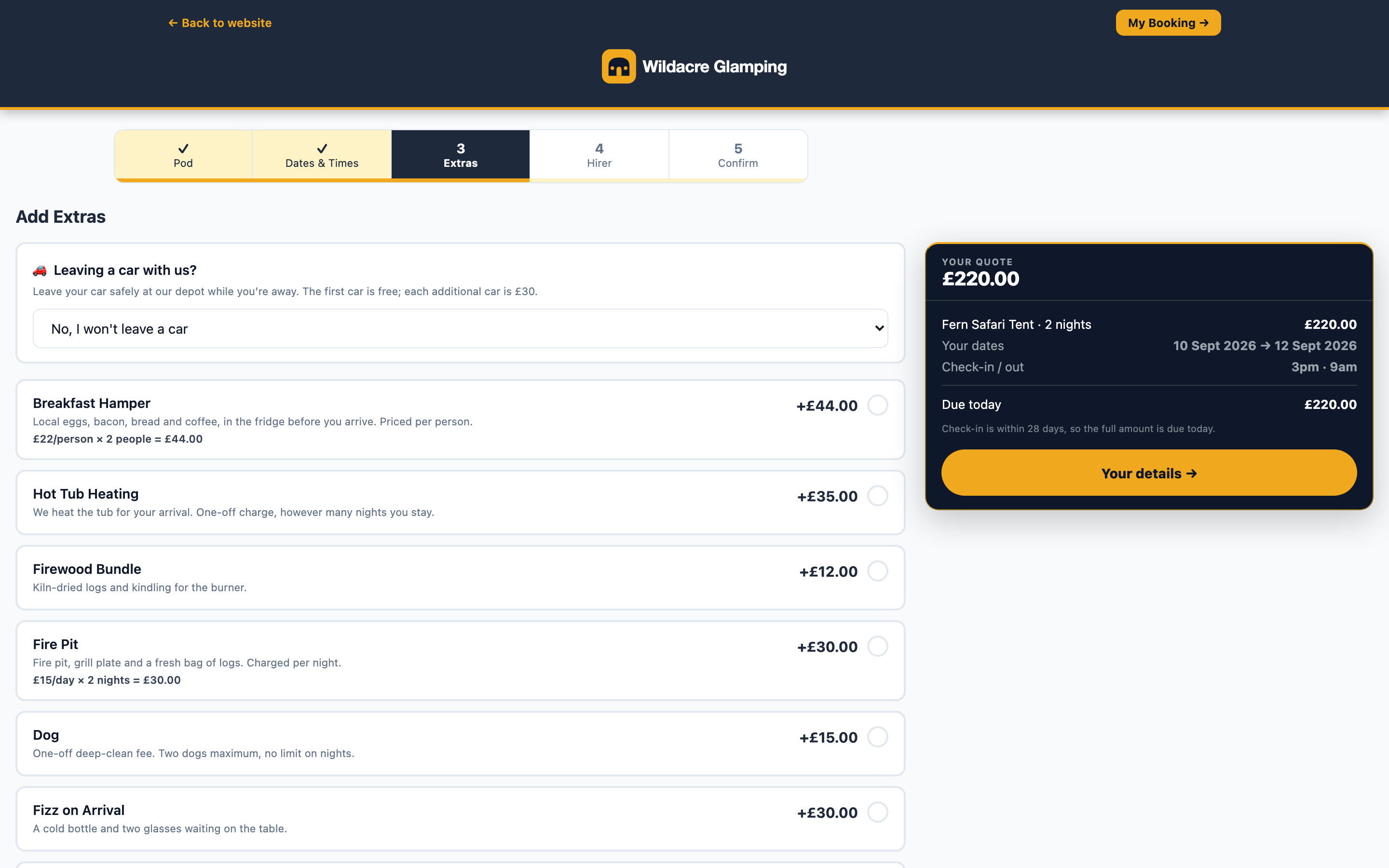
Wildacre Glamping — extras priced per person, per night or once.
Where Booqello fits
Booqello is managed booking software for glamping sites, campsites, holiday lets and hire businesses. Each unit has its own calendar, price, rules and changeover buffer; payments settle into your own merchant account; and glamping sites pay a flat monthly rate per unit, £2 a unit above the five every plan includes, with no percentage of bookings. See Booqello for glamping sites →